
Solutions
Features
Integrations
Pricing
Resources
10 best HR chatbot solutions in 2026 (compared with pricing)
Compare leading HR chatbot solutions, including features, pricing, and workflow automation depth. Find the best HR chatbot software for scalable employee support.


TL;DR
The best HR chatbot solutions in 2026 combine conversational AI with workflow automation, enabling HR teams to resolve requests instead of only answering FAQs.

The most valuable platforms integrate with HRIS, payroll, and identity systems to automate leave, onboarding, policy, and employee data workflows.
Key buying factors include automation depth, multilingual support, security controls, pricing transparency, and measurable ticket deflection ROI.
Workativ stands out through no-code AI agents, deep HR workflow orchestration, global support, and predictable pricing for long-term scalability.
HR leaders and CHROs are under pressure to deliver instant employee support while reducing operational costs. Manual HR helpdesks, email-based queries, and ticket overload are slowing teams down and impacting employee experience. This is why many organizations are evaluating the top tools in the HR chatbot solutions category.
Choosing the right platform is critical, not all chatbots offer real automation, system integrations, or enterprise-grade security. In this guide, we compare the best HR chatbot software, including features, pros, cons, and pricing, to help you select the right solution for your organization.
Which HR chatbot is best for employee support in 2026?
The best HR chatbot solutions today do far more than answer employee FAQs. Modern platforms combine AI agents with workflow automation to help HR teams resolve requests instantly across Slack, Microsoft Teams, WhatsApp, web portals, and internal employee systems.
But not all HR chatbot platforms are designed for the same type of organization.
Some solutions are built primarily for large enterprises with complex implementation cycles, heavy consulting requirements, and enterprise-only pricing models. Others focus on faster deployment, no-code automation, and scalable employee self-service for SMB and mid-market HR teams.
The right HR chatbot should not only answer questions — it should automate HR workflows end-to-end.
That includes:
leave requests and approvals
onboarding and offboarding workflows
payroll and payslip enquiries
HR policy retrieval
employee data updates
HR ticket routing and escalation
In this guide, we compare the best HR chatbot solutions for employee support based on:
workflow automation capabilities
HRIS and payroll integrations
deployment speed
pricing transparency
employee experience
multilingual support
scalability and governance
workflow execution depth
Whether you are evaluating your first HR chatbot or replacing a legacy employee support system, this buyer’s guide will help you identify which platform best fits your HR operations, automation goals, and organizational size.
At a glance: Top HR chatbot solutions
Platform | Best for | Key features | Pricing |
Workativ | Mid-market and enterprise organizations seeking end-to-end HR workflow automation | AI agent builder, RAG-based knowledge retrieval, onboarding and offboarding automation, HRIS and payroll integrations, 90+ language support | Magic: Free plan; Business: $349/month; Enterprise: Custom pricing |
Moveworks | Large enterprises requiring unified HR and IT automation | Enterprise reasoning engine, AI agents, ServiceNow and Workday integrations, automated case resolution | Custom enterprise pricing; high annual contract value |
Leena AI | Organizations focused on HR policy automation and employee query resolution | Policy automation, knowledge base integration, HR case management, multilingual support | Custom enterprise pricing |
Kore.ai | Enterprises building customizable AI assistants across HR and IT | XO platform, AI agent framework, enterprise integrations, advanced NLP | Custom enterprise pricing |
Eightfold AI | Enterprises prioritizing talent intelligence and workforce planning | AI talent matching, internal mobility, skills graph, workforce analytics | Custom enterprise pricing |
BEYOND FAQ BOTS
Workativ is an AI agent - it executes leave requests, payroll queries, onboarding and offboarding workflows.
Best HR chatbot solutions for employee support in 2026
If you are evaluating which HR chatbot is best for employee support, the biggest difference between platforms today is not just conversational AI — it is workflow execution.
The best HR chatbot solutions help organizations:
reduce HR ticket volume
automate employee workflows
improve employee self-service
integrate with HRIS and payroll systems
scale HR support efficiently
This top HR chatbot tools comparison evaluates platforms based on:
employee support quality
workflow automation depth
HRIS integrations
deployment complexity
pricing transparency
scalability
SMB and enterprise fit
Whether you are looking for an enterprise-grade platform or researching the best chatbot for employee HR queries, the solutions below represent some of the strongest options in the HR chatbot ranking 2026 landscape.
Workativ – Best for mid-market HR workflow automation

Many HR chatbot platforms are designed primarily for large enterprises with long implementation cycles, consulting-heavy deployments, and complex pricing models. Workativ is built differently — focusing on fast automation, operational simplicity, and measurable HR outcomes.
Instead of functioning like a traditional FAQ bot, Workativ combines:
conversational AI
HR workflow automation
HRIS and payroll integrations
multilingual employee support
AI agents for workflow execution
You seamlessly get all these significant features inside a no-code platform that can go live in as little as 2 days.
The high-yield benefits for HR teams are:
leave requests and approvals
onboarding and offboarding
payroll enquiries
employee data updates
HR ticket routing
So, you can automate them easily without depending heavily on engineering teams.
For organizations researching the best chatbot for employee HR queries, Workativ stands out for balancing enterprise-grade automation with faster deployment and easier adoption.
In many top HR chatbot tools comparison discussions, Workativ is often recognized for:
predictable session-based pricing
strong SMB and mid-market fit
rapid deployment
workflow execution capabilities
scalable employee self-service
This makes it especially valuable for:
SMBs
mid-market organizations
lean HR teams
fast-growing companies
So regardless of vertical type, anyone can automate employee support without the complexity of enterprise-heavy HR platforms.
It’s also one reason Workativ consistently appears in conversations around which HR bot has the best reviews for usability, deployment speed, and HR workflow automation.
Key features:
Agent Studio: Agent Studio allows HR teams to design, test, and deploy AI agents that automate leave approvals, onboarding workflows, and internal HR processes without requiring technical expertise.
Knowledge AI (RAG Engine): Knowledge AI retrieves accurate answers from HR policy documents and internal knowledge bases to ensure employees receive compliant and up-to-date information.
Shared Live Inbox: The Shared Live Inbox enables HR teams to monitor conversations in real time and take over sensitive payroll, grievances, or compliance discussions.
AI App Workflows: Create actions by integrating with HRIS and payroll systems to automate tasks such as leave balance checks, payslip downloads, employee data updates, and approval routing.
AI Agent Builder: The AI Agent Builder enables HR administrators to configure conversational journeys for benefits enrollment, onboarding, and case escalation.
Pre-built HR Templates: Pre-built templates accelerate deployment by providing ready-made workflows for onboarding, offboarding, leave management, and payroll-related queries.
Location-Based Support: The platform supports over 90 languages and enables location-based HR responses, ensuring employees receive region-specific policies, benefits information, and compliance guidance.
Advanced Analytics and Reporting: Advanced analytics provide visibility into resolution rates, query categories, automation coverage, and ticket deflection, helping HR leaders measure operational impact.
Dynamic Notifications: Automatically remind employees about pending approvals, onboarding documents, compliance deadlines, and HR action items.
Pros:
End-to-end workflow automation: Workativ automates complete HR workflows rather than limiting support to static responses, significantly reducing the ticket backlog and manual processing.
Deep system integrations: The platform integrates directly with HRIS and payroll systems, allowing employees to complete HR tasks without switching applications.
Enterprise governance and security: Role-based access controls and compliance frameworks ensure that sensitive HR data remains secure across departments and geographies.
Predictable and transparent pricing: Unlike many enterprise-only vendors, Workativ provides predictable pricing that improves budgeting clarity and long-term ROI planning.
Cons:
May be perceived as “SMB product” by some enterprises: Workativ’s affordable pricing and free entry plan can sometimes be perceived as a budget-tier solution by enterprise buyers who associate higher price points with premium positioning.
Advanced AI analytics available in higher tiers: While core AI capabilities are included across plans, more advanced analytics, deeper insights, and enhanced AI performance dashboards are available only in the Business and Enterprise tiers.
Pricing:
Magic: Free plan
Business: $349 per month
Enterprise: Custom pricing based on integration depth and automation scale
Free demo available
Ideal use case:
Workativ is ideal for organizations that want to automate high-volume and process-driven HR workflows, including:
Onboarding automation, where document collection, policy acknowledgments, task reminders, and system provisioning must be coordinated across multiple departments.
Offboarding management, where access revocation, final payroll processing, exit documentation, and compliance steps need structured workflow execution.
These hr chatbot examples show how policy enquiries at scale are resolved instantly with accurate answers pulled from approved HR knowledge sources.
Payroll and compensation queries, including payslip downloads, tax document access, and salary-related clarifications.
HR information updates, where employees need to modify personal details, update banking information, or check leave balances directly within integrated HR systems.
Global HR support, where multilingual and location-based responses ensure region-specific policies and compliance requirements are addressed correctly.
Where Workativ differs from enterprise-only HR chatbot vendors
Many HR chatbot platforms are built primarily for Fortune 500 organizations with complex deployment requirements, large consulting engagements, and enterprise-heavy pricing models. While these platforms may offer deep customization, they often require long implementation cycles and significant operational overhead.
Workativ is designed to make HR automation more accessible and easier to scale.
Instead of treating HR automation as a multi-month transformation project, Workativ focuses on faster time-to-value through:
deployment in as little as 2 days
predictable session-based pricing
no-code workflow automation
easier HR-led implementation
faster employee adoption
This approach makes Workativ especially appealing for organizations evaluating platforms through an HR chatbot buyer’s guide lens, where implementation speed, operational simplicity, and pricing transparency matter just as much as features.
In many top HR chatbot tools comparison discussions, Workativ stands out by offering enterprise-grade workflow automation without the complexity typically associated with enterprise-only HR platforms.
It’s also one reason the platform is frequently considered among discussions around which HR bot has best reviews for usability, deployment speed, and overall HR team accessibility.
Moveworks - Best for enterprise HR and IT automation

Moveworks is an enterprise AI assistant designed to automate HR and IT service delivery at scale. The platform uses a proprietary reasoning engine and AI agents to resolve employee requests, surface policy answers, and execute workflows across enterprise systems. It is primarily built for large organizations seeking centralized, AI-driven service automation.
Key features:
Reasoning engine: Moveworks uses a contextual reasoning engine to understand employee intent and resolve complex HR queries without relying on scripted flows.
AI agents for HR workflows: The platform deploys AI agents to automate HR tasks, including leave requests, policy lookups, and case resolution, across systems.
Enterprise system integrations: Moveworks integrates with platforms like ServiceNow, Workday, and identity systems to execute workflows directly within enterprise environments.
Automated case resolution: The system categorizes, routes, and resolves HR cases automatically, reducing manual service desk intervention.
Pros:
Strong enterprise-grade AI architecture: The platform is designed to handle high ticket volumes and complex enterprise workflows at scale.
Deep ecosystem integration: Moveworks aligns closely with ServiceNow and other enterprise systems for unified service delivery.
Cons:
Premium pricing model: Moveworks typically operates under high annual enterprise contracts that may not suit mid-market budgets.
Primarily enterprise-focused: Smaller organizations may find the platform overly complex for their HR automation requirements.
Pricing:
Custom enterprise pricing
Typically structured as high annual contract agreements
ServiceNow acquisition may influence bundled pricing within the ServiceNow ecosystem
Ideal use case
Moveworks is ideal for large enterprises that require centralized AI automation across HR and IT service environments, particularly in the following scenarios:
Enterprise HR and IT service automation, where high volumes of employee tickets need to be automatically categorized, routed, and resolved within systems like ServiceNow and Workday.
Cross-functional employee support at scale, where a unified AI assistant must handle HR policy enquiries, payroll questions, and IT service requests within complex enterprise ecosystems.
Leena AI — Best for HR policy and employee query automation

Leena AI is an HR chatbot solution focused on resolving employee queries and automating policies. The platform is designed to help HR teams centralize policy information, automate responses to common employee questions, and manage HR service requests through conversational interfaces.
Key features:
Policy automation: Automates responses to HR policy enquiries by surfacing approved information directly from internal knowledge repositories.
Knowledge base integration: Connects with HR documentation systems to ensure employees receive consistent and up-to-date answers.
HR case management: Automatically creates and routes HR tickets to the appropriate teams when queries require manual intervention.
Conversational employee support: Handles common HR questions related to leave, benefits, and payroll through natural language interactions.
Pros:
Strong HR domain focus: The platform is purpose-built for HR teams, emphasizing policy communication and employee support.
Multi-language support: Supports global workforces by enabling HR conversations across multiple languages.
Cons:
Limited advanced workflow automation: The platform focuses more on query resolution and case routing than on executing complex HR system actions.
Enterprise-focused positioning: Pricing and deployment are primarily suited for larger organizations.
Pricing:
Custom pricing
Enterprise-focused plans
Ideal use case
Leena AI is ideal for organizations that want to centralize HR policy enquiries and reduce repetitive employee questions without implementing deep workflow automation across systems.
Kore.ai – Best for customizable enterprise AI assistants

Kore.ai is an enterprise conversational AI platform that enables organizations to build virtual assistants and AI agents for HR, IT, and customer service use cases. Through its XO platform, Kore.ai allows enterprises to design, deploy, and manage AI-powered HR assistants that automate employee support, policy queries, and service workflows across multiple systems.
Key features:
XO platform and AI agent framework: The XO platform enables enterprises to design and manage AI agents that automate HR interactions and internal service workflows at scale.
Pre-built HR virtual assistants: Kore.ai provides configurable HR assistant templates that support employee policy queries, leave management, and service desk interactions.
Enterprise system integrations: The platform integrates with HRIS, ITSM, and enterprise applications to automate ticket creation, routing, and workflow execution.
Advanced NLP and multilingual support: Kore.ai uses enterprise-grade natural language processing to handle complex HR queries across multiple languages.
Pros:
Highly customizable AI framework: The platform allows enterprises to design tailored HR assistants with complex conversational flows and integrations.
Strong enterprise scalability: Kore.ai is built to support large organizations with high employee volumes and multi-department automation needs.
Cons:
Requires configuration expertise: The platform may require technical resources to fully design, train, and maintain advanced HR assistants.
Enterprise-oriented pricing model: Kore.ai is primarily positioned for large enterprises with significant automation budgets.
Pricing:
Custom enterprise pricing
Quote-based plans depending on scale and deployment
Ideal use case
Kore.ai is ideal for large enterprises seeking to build customizable HR virtual assistants as part of a broader enterprise conversational AI strategy.
It is particularly suited for organizations that require deep customization, omnichannel deployment, and centralized AI governance across HR and other business functions.
Eightfold AI – Best for AI-driven talent intelligence and workforce planning

Eightfold AI is a talent intelligence platform designed to help organizations manage talent acquisition, internal mobility, workforce planning, and skills development using artificial intelligence. While not a traditional HR chatbot solution, Eightfold uses AI-driven insights and automation to support HR teams in recruitment, talent management, and employee engagement across the workforce lifecycle.
Key features:
Talent acquisition automation: Eightfold uses AI to match candidates to job roles based on skills and potential, not just keywords or resumes.
Internal mobility and career pathing: The platform identifies skill gaps and recommends internal opportunities to improve employee retention and career development.
Workforce intelligence and analytics: Eightfold provides AI-powered insights into workforce capabilities, diversity metrics, and hiring trends to support strategic HR decisions.
Skills-based talent architecture: The system builds a dynamic skills graph to map employee capabilities and align them with business needs.
Pros:
Strong AI-driven talent intelligence: The platform excels in matching, skills mapping, and workforce planning at enterprise scale.
Enterprise-grade workforce analytics: Eightfold provides deep visibility into talent pipelines and internal mobility opportunities.
Cons:
Not a dedicated HR chatbot solution: The platform focuses more on talent management than on automating HR helpdesk workflows.
Enterprise-level pricing and implementation: Eightfold is primarily positioned for large organizations with complex talent ecosystems.
Pricing
Custom enterprise pricing
Quote-based plans depending on modules and scale
Ideal use case
Eightfold AI is ideal for enterprises focused on AI-driven talent acquisition, workforce planning, and internal mobility rather than traditional HR service desk automation.
It is particularly suited for organizations that prioritize skills intelligence, recruitment optimization, and long-term workforce strategy.
PREDICTABLE PRICING. END-TO-END AUTOMATION.
Workativ automates HR workflows with transparent pricing - no enterprise-only contracts, no guesswork.
No-code · Deep integrations · Deploy in minutes
See a Quick Demo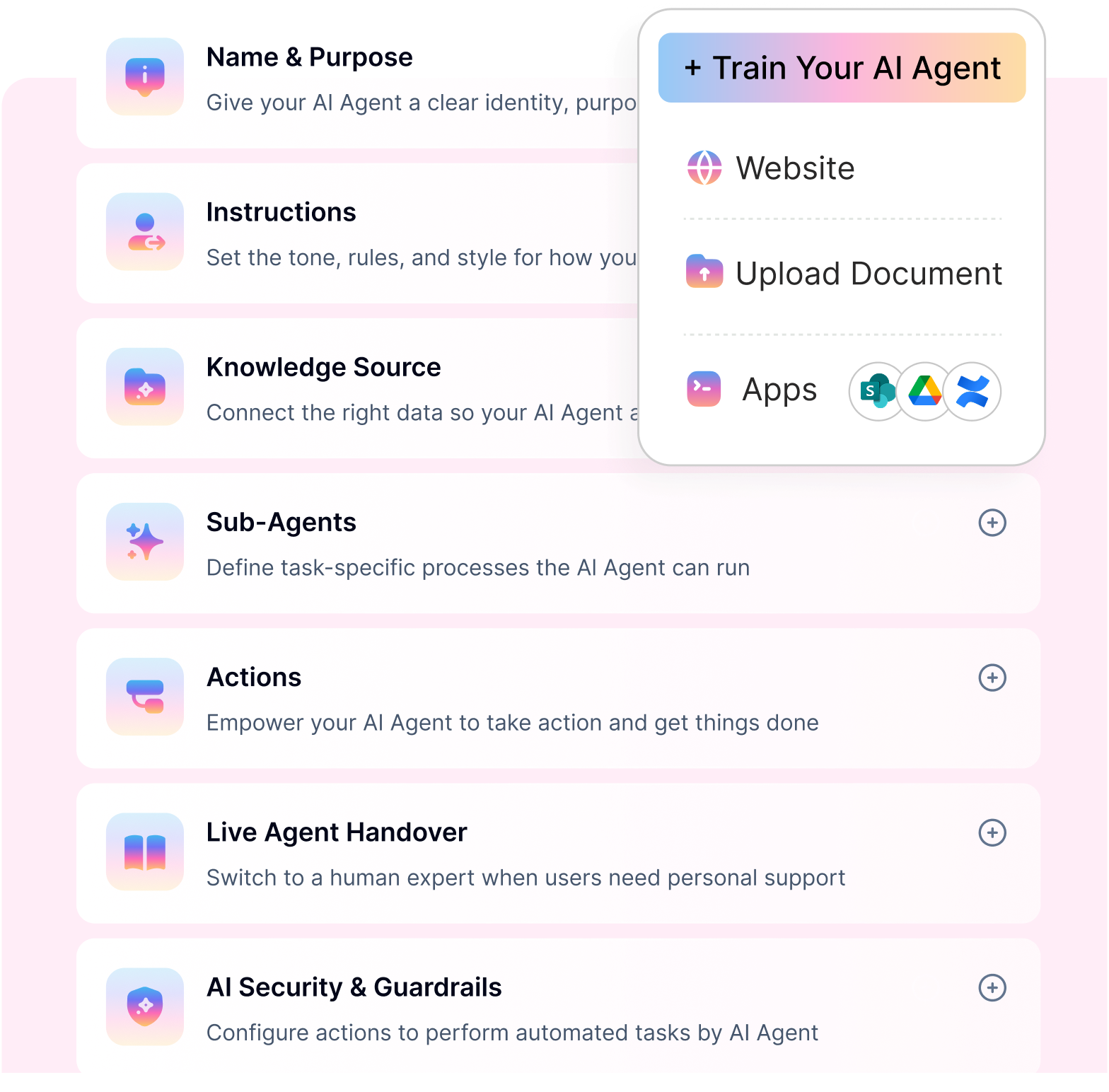
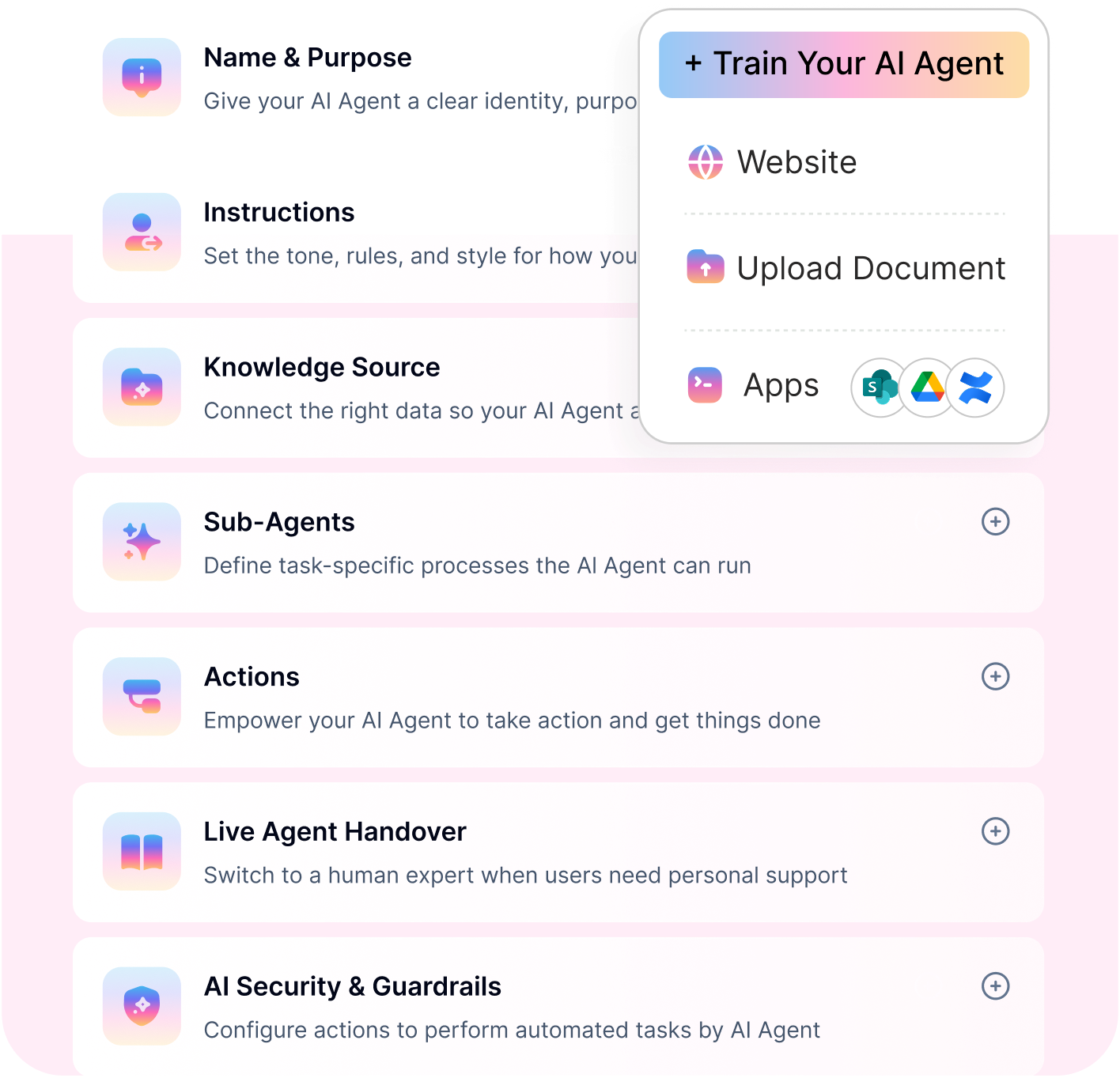
MeBeBot – Best for internal HR and IT employee self-service

MeBeBot is an AI-powered HR and IT support chatbot designed to automate employee service requests and reduce helpdesk workload. The platform focuses on delivering instant answers to employee questions, integrating with collaboration tools like Microsoft Teams and Slack, and providing seamless escalation to human support when needed.
Key features:
HR and IT virtual assistant: MeBeBot provides an AI assistant that answers employee questions related to HR policies, benefits, payroll, and IT support in real time.
Knowledge base automation: The platform pulls information from internal documentation and knowledge systems to ensure consistent and accurate responses.
Collaboration tool integration: MeBeBot integrates natively with Microsoft Teams and Slack to deliver support within the tools employees already use.
Live agent handoff: The system enables smooth escalation to HR or IT teams when complex issues require human intervention.
Pros:
Quick deployment within collaboration tools: The platform can be rapidly implemented within Microsoft Teams and Slack environments.
Strong focus on employee self-service: MeBeBot helps reduce repetitive support tickets by delivering instant answers to policies and processes.
Limited advanced workflow orchestration: The platform focuses primarily on query resolution rather than deep system-level workflow automation.
Primarily internal support-focused: MeBeBot is designed mainly for HR and IT helpdesk use cases rather than broader AI agent applications.
Pricing:
Custom pricing
Typically structured based on employee count and deployment scope
Ideal use case
MeBeBot is ideal for mid-sized and enterprise organizations that want to automate repetitive HR and IT queries within collaboration platforms.
It is particularly suited for companies looking to reduce email-based support and centralize employee service interactions in Teams or Slack.
XOR – Best for AI recruiting and candidate engagement

XOR is an AI-powered recruiting and conversational platform that automates candidate engagement, screening, interview scheduling, and job communication. The platform uses AI chatbots and text-based conversational workflows to streamline talent acquisition and candidate interactions across multiple channels, including SMS, WhatsApp, and career sites.
Key features:
AI chatbot candidate screening: Automates candidate screening conversations using customizable questions to qualify applicants before they reach recruiters.
Automated interview scheduling: Enables candidates to self-schedule interviews directly on recruiter calendars through AI-driven scheduling workflows.
Multi-channel engagement: Supports engagement across SMS, WhatsApp, career sites, and messaging platforms to reach candidates on their preferred channels.
Text-to-apply automation: Allows candidates to apply via text or QR code, while automating follow-up communication and nurturing the talent pipeline.
Pros:
Comprehensive recruiting automation: Combines screening, scheduling, and messaging automation to significantly reduce recruiter administrative effort.
Strong multi-channel capabilities: Engages candidates across SMS and messaging platforms to increase response rates and hiring speed.
Cons:
Recruitment-focused platform: XOR primarily supports talent acquisition workflows rather than broader HR service desk or employee self-service automation.
Limited HR lifecycle coverage: The platform is not designed to automate onboarding, payroll enquiries, or internal HR workflows beyond recruiting.
Pricing:
Custom pricing based on hiring volume and modules selected
Pricing models may include subscription-based or per-hire structures
Ideal use case:
XOR is ideal for organizations with high-volume hiring needs that want to automate candidate communication, screening, and scheduling across multiple messaging platforms.
It is particularly suited for recruitment teams aiming to reduce manual coordination and improve candidate response times through 24/7 conversational engagement.
ServiceNow HR Service Delivery – Best for enterprises already using ServiceNow

ServiceNow HR Service Delivery is an enterprise-grade HR service management platform designed to streamline employee service operations through case management, workflow automation, and digital employee experiences. Built on the Now Platform, it centralizes HR processes, improves visibility, and automates service delivery across the employee lifecycle.
Key features:
HR case management: Automates case creation, categorization, routing, and resolution to improve response times and reduce manual HR workload.
Employee service portal: Provides a centralized self-service portal where employees can access policies, submit requests, and track case status.
Workflow automation: Enables HR teams to automate onboarding, offboarding, document management, and internal approval processes.
Enterprise integrations: Integrates with core HR systems, identity platforms, and other enterprise applications to orchestrate cross-functional workflows.
Pros:
Strong enterprise workflow engine: The platform provides robust case management and process automation capabilities for complex HR environments.
Deep integration within ServiceNow ecosystem: Organizations using ServiceNow can extend automation seamlessly across HR, IT, and other service domains.
Cons:
Complex implementation: Deployment and configuration may require dedicated technical resources and platform expertise.
Premium enterprise pricing: The platform is typically positioned for large enterprises with significant service management budgets.
Pricing:
Custom enterprise pricing
Licensing typically based on modules and employee count
Ideal use case
ServiceNow HR Service Delivery is ideal for large enterprises that require structured HR case management and standardized service workflows across global operations.
It is particularly suited for organizations already operating within the ServiceNow ecosystem and looking to unify HR, IT, and service operations on a single platform.
HiBob – Best for modern HR management and employee self-service

HiBob is a modern core HR platform designed to manage employee data, engagement, and HR processes across the organization. While not a standalone HR chatbot solution, HiBob provides built-in employee self-service capabilities, automated workflows, and centralized HR data management to streamline HR operations.
Key features:
Core HR management: HiBob centralizes employee records, job history, compensation data, and organizational structures within a unified HR system.
Employee self-service portal: The platform allows employees to update personal information, access documents, request time off, and view company policies directly within the system.
Automated HR workflows: HiBob automates onboarding, offboarding, approvals, and document management to reduce manual administrative effort.
People analytics and reporting: The system provides real-time HR insights, workforce metrics, and customizable reports to support data-driven HR decisions.
Pros:
Strong modern HRIS foundation: HiBob provides a comprehensive and user-friendly core HR system for managing employee data and processes.
Integrated employee experience features: The platform combines HR administration, engagement tools, and workflow automation in one system.
Cons:
Not a dedicated AI chatbot platform: HiBob does not function as a standalone AI-driven HR service desk solution.
Automation depth depends on configuration: Advanced automation may require customization within the broader HRIS environment.
Pricing:
Custom pricing
Subscription-based plans based on company size and the modules selected
Ideal use case
HiBob is ideal for growing mid-market and enterprise organizations that want a modern core HR system with built-in employee self-service and workflow automation.
It is particularly suited for companies looking to centralize HR data, improve engagement, and automate standard HR processes within a single HRIS platform.
SAP SuccessFactors – Best for enterprise HCM and global HR operations

SAP SuccessFactors is a comprehensive human capital management platform designed to manage core HR, talent management, payroll, and workforce planning at enterprise scale. The platform includes AI-driven digital assistant capabilities that support employee self-service, automate HR workflows, and provide contextual guidance within the SAP ecosystem.
Key features:
Core HR and talent management suite: SAP SuccessFactors centralizes employee records, performance management, recruiting, learning, and workforce planning within a unified HCM platform.
Embedded digital assistant: The platform includes AI-powered assistant capabilities that guide employees through HR processes such as leave requests, benefits access, and policy navigation.
Workflow automation and approvals: SuccessFactors automates onboarding, offboarding, and internal HR approval workflows across departments.
Enterprise analytics and workforce insights: The system provides advanced workforce analytics, compliance tracking, and reporting to support strategic HR decision-making.
Pros:
Comprehensive enterprise HCM coverage: The platform supports core HR, talent, payroll, and workforce planning within a single ecosystem.
Deep SAP ecosystem integration: Organizations using SAP can extend automation seamlessly across finance, operations, and HR systems.
Cons:
Complex implementation and configuration: Deployment often requires significant technical resources and change management.
Premium enterprise pricing model: The platform is primarily designed for large enterprises with substantial HR technology budgets.
Pricing:
Custom enterprise pricing
Licensing typically based on modules and employee count
Ideal use case
SAP SuccessFactors is ideal for large enterprises that require a full-suite HCM platform with integrated AI-driven employee self-service capabilities.
It is particularly suited for organizations already operating within the SAP ecosystem and seeking centralized HR management with embedded automation.
READY TO MOVE FROM CHATBOT TO AI AGENT?
See how Workativ executes HR workflows end-to-end - not just answers questions - live demo.
Personalized demo · No commitment · Setup in Mins
See a Quick DemoBenefits of AI agent HR chatbot software
Modern AI agent HR chatbot solutions go far beyond basic FAQ automation. When implemented correctly, they transform how HR teams deliver support, manage workflows, and scale employee service operations across the organization.
Reduced HR ticket volume : This is a core benefit of hr service management automation — AI agent chatbots resolve repetitive queries related to leave policies, payroll access, and benefits enrollment, significantly reducing incoming HR tickets. By resolving common requests instantly, HR teams can focus on strategic initiatives instead of administrative workload.
Faster employee response times : Unlike traditional email-based helpdesks, AI-powered HR chatbots provide instant responses 24/7. Employees no longer wait hours or days for answers to payroll, policy, or leave-related questions, improving overall service efficiency.
Improved employee experience : AI agent chatbots deliver consistent, accurate, and accessible support across platforms such as Teams, Slack, web, and mobile. This creates a consumer-grade employee experience where HR assistance feels seamless and responsive.
Lower operational costs : By automating high-volume HR processes and reducing manual case handling, organizations can lower support costs without increasing HR headcount. Automation also reduces errors and rework, contributing to long-term cost efficiency.
Scalable global HR support : AI-driven HR chatbot solutions support multilingual conversations and location-based policy delivery, enabling consistent service across global offices. This ensures employees receive region-specific guidance while maintaining centralized governance.
Data-driven HR insights : Advanced analytics provide visibility into query trends, resolution rates, automation coverage, and employee interaction patterns. These insights help HR leaders identify process gaps, improve policies, and measure the ROI of HR automation initiatives.
HR chatbot vs HR software: what’s the difference?
One of the biggest misconceptions in HR automation is that organizations must choose between an HR chatbot and HR software.
In reality, they solve completely different problems. An HRIS or HR management platform is designed to store and manage employee data, payroll, benefits, records, and HR operations. An HR chatbot acts as the conversational layer that makes those systems easier for employees to use.
HR software (HRIS) | HR chatbot |
Stores employee records | Makes HR systems conversational |
Manages payroll and HR data | Automates employee interactions |
Requires portal navigation | Works inside Slack, Teams, and chat |
Built for HR administration | Built for employee self-service |
This is why modern HR chatbots do not replace HR software — they extend it.
Platforms like Workativ connect directly with systems such as:
BambooHR
Workday
SAP SuccessFactors
ADP
With Workativ, it is easy to make HR support faster and more accessible for employees.
Instead of navigating multiple HR portals, employees can manage a lot of HR workflows such as
request leave through chat
retrieve payslips instantly
update personal information
complete onboarding tasks
raise HR requests conversationally
For many organizations evaluating HR chatbot vs HRIS software difference, the real value comes from combining both systems together.
The HRIS remains the system of record, while the chatbot becomes the employee experience layer that improves accessibility, adoption, and workflow execution.
This is also why many growing organizations no longer view chatbots as simple FAQ tools. They are increasingly becoming the “last-mile employee support layer” on top of the existing HR stack.
The best HR chatbot platforms now execute workflows — not just answer questions
HR chatbots have evolved far beyond simple FAQ bots. Today, the best platforms automate workflows, integrate with HR systems, and help employees resolve requests end-to-end through conversational interfaces. Instead of only answering questions, modern HR chatbots now support:
leave requests and approvals
onboarding workflows
payroll enquiries
employee self-service
HR ticket routing
This shift is changing how organizations evaluate employee support technology.
For companies researching which HR chatbot is best for employee support, the biggest differentiator is no longer just conversational AI — it’s workflow execution. The strongest platforms combine:
conversational AI
workflow automation
HRIS integrations
multilingual support
real-time HR execution
At the same time, organizations evaluating HR chatbot vs HRIS software difference are realizing these tools work best together. HR software remains the system of record, while HR chatbots become the employee experience layer that makes those systems easier and faster to use.
However, not all platforms are built for the same type of organization. Some enterprise-focused vendors prioritize deep customization but often come with longer implementation cycles, consulting-heavy deployments, and enterprise-only pricing.
For organizations prioritizing:
faster deployment
predictable pricing
no-code automation
scalable employee self-service
simpler HR workflow automation
Workativ provides one of the strongest balances between usability, automation depth, deployment speed, and affordability.
Whether you are building an HR chatbot buyer’s guide, researching a top HR chatbot tools comparison, or deciding Should I use an HR chatbot or HR software?, the future clearly belongs to platforms that can execute workflows — not just answer questions.
👉 See why 500+ HR teams chose Workativ over enterprise alternatives. Book a demo today and experience end-to-end HR automation in action.
FAQs
What are HR chatbot solutions?
HR chatbot solutions are AI-powered conversational platforms that automate employee support by answering policy questions, executing HR workflows, and integrating with HRIS and payroll systems. Modern solutions function as AI agents rather than simple FAQ bots.
What is the difference between a rule-based HR chatbot and an AI agent HR chatbot?
Rule-based HR chatbots follow predefined scripts and respond to specific keywords. AI agent HR chatbots use natural language understanding, contextual reasoning, and system integrations to automate workflows such as leave requests, onboarding processes, and payroll enquiries.
Can HR chatbot software integrate with HRIS and payroll systems?
Yes, advanced HR chatbot solutions integrate directly with HRIS, payroll, identity management, and benefits platforms. This allows employees to check leave balances, download payslips, update personal information, and submit HR requests directly within the chat interface.
Are HR chatbots secure for handling employee data?
Enterprise-grade HR chatbot platforms provide role-based access controls, encryption, audit logs, and compliance frameworks to protect sensitive employee data. Security and governance capabilities should be carefully evaluated before deployment.
How do HR chatbot solutions reduce ticket volume?
AI agent chatbots automate repetitive employee queries and execute common HR tasks instantly. This reduces manual case creation, lowers helpdesk workload, and improves first-contact resolution rates.
Do HR chatbot solutions support global workforces?
Many modern platforms support multiple languages and location-based responses, enabling organizations to deliver region-specific policies and compliance guidance across global teams.
How long does it take to implement an HR chatbot solution?
Implementation timelines vary depending on complexity, integrations, and workflow depth. No-code AI agent platforms can often be deployed faster than heavily customized enterprise systems.
What should HR leaders look for when selecting the best HR chatbot solutions?
HR leaders should evaluate conversational AI capability, workflow automation depth, system integrations, security controls, scalability, analytics, and pricing transparency before choosing a solution.
How do HR chatbot solutions improve employee self-service adoption?
By embedding support inside Teams, Slack, and employee portals, chatbots reduce friction and make HR assistance instantly accessible. Faster task completion naturally improves repeat usage and trust.
Do HR chatbots replace HR software?
No. Modern HR chatbots typically integrate with HR systems like BambooHR, Workday, SAP SuccessFactors, and ADP to automate employee support workflows and improve self-service experiences.
Are HR chatbots worth it for small businesses?
Yes. HR chatbots help small businesses automate repetitive HR tasks, reduce manual workload, improve employee response times, and scale support operations without increasing HR headcount.
'%3e%3cpath%20d='M11.5732%2031.7068L19.2977%2022.7433L11.5732%2011.5366H17.4664L22.6245%2018.942L29.0522%2011.5366H30.7788L23.4029%2020.0985L31.4127%2031.7086H25.4997L20.1231%2023.9069L13.3197%2031.7068H11.5732ZM16.6519%2012.8366H13.9536L26.354%2030.4462H28.9926L28.8265%2030.1576L16.6519%2012.8366Z'%20fill='%230C0C0C'/%3e%3c/g%3e%3cdefs%3e%3cclipPath%20id='clip0_505_14364'%3e%3crect%20width='19.7681'%20height='20.2432'%20fill='white'%20transform='translate(11.573%2011.5365)'/%3e%3c/clipPath%3e%3c/defs%3e%3c/svg%3e)

'%3e%3cpath%20d='M25.2175%2011.7557L26.9132%2011.911V15.0496C26.0135%2015.1444%2024.1746%2014.7452%2023.5821%2015.5947C23.4908%2015.726%2023.3291%2016.1592%2023.3291%2016.3091V19.002H26.7392L26.3346%2022.5281H23.3291V31.5952H19.707V22.5863L19.649%2022.5281H16.6628V19.002H19.707C19.7813%2017.4024%2019.4664%2015.7042%2020.1132%2014.1986C20.6748%2012.8902%2021.7857%2012.0974%2023.1666%2011.8435L23.7151%2011.7557H25.2183H25.2175Z'%20fill='%230C0C0C'/%3e%3c/g%3e%3cdefs%3e%3cclipPath%20id='clip0_505_14375'%3e%3crect%20width='10.2695'%20height='19.8027'%20fill='white'%20transform='translate(16.658%2011.7567)'/%3e%3c/clipPath%3e%3c/defs%3e%3c/svg%3e)
About the Author
Deepa Majumder

Senior content writer
Deepa Majumder is a writer who nails the art of crafting bespoke thought leadership articles to help business leaders tap into rich insights in their journey of organization-wide digital transformation. Over the years, she has dedicatedly engaged herself in the process of continuous learning and development across business continuity management and organizational resilience.
Her pieces intricately highlight the best ways to transform employee and customer experience. When not writing, she spends time on leisure activities.
Auto-resolve 60% of Your Employee
Queries With AI Agents & Automation
- No credit card required
- Setup in minutes
- Cancel Anytime