
Solutions
Features
Integrations
Pricing
Resources
HR chatbot pricing explained: models, costs & pricing plans
Learn how HR chatbot pricing works, including pricing models, subscription costs, agency fees, and enterprise HR chatbot pricing plans to evaluate ROI.


TL;DR
HR chatbot pricing depends on subscription tiers, usage-based AI costs, integrations, compliance, and implementation complexity—not just the base software fee.

The true total cost includes AI token usage, custom integrations, analytics add-ons, data storage, security controls, and long-term maintenance.
No-code platforms with built-in integrations reduce agency costs, improve deployment speed, and make pricing more predictable as employee adoption grows.
Workativ stands out with flexible pricing, reduced AI credit exhaustion risk, enterprise features, and faster HR chatbot ROI through no-code deployment.
HR chatbots are quickly becoming a core part of modern HR operations. From employee self-service and onboarding to payroll support and HR helpdesk automation, organizations are increasingly using AI to reduce repetitive workload and improve employee support experiences.
But one of the biggest questions buyers still have is: how much does an HR chatbot actually cost?
HR chatbot pricing can range from under $500 per month for small teams to enterprise platforms that cost $200K+ annually once implementation, integrations, and support are included.
The challenge is that most HR AI vendors do not make pricing easy to understand. Costs often increase through:
AI usage overages
implementation fees
workflow add-ons
enterprise support contracts
per-seat pricing that becomes expensive as companies grow
For HR teams, the challenge is not just choosing a chatbot. It is choosing a pricing model that:
stays predictable as adoption increases
is affordable for growing teams
delivers measurable ROI
is easy to justify internally
In this guide, we’ll break down:
how different HR chatbot pricing models work
what companies should realistically expect to pay each month
the hidden costs most buyers miss
how to estimate HR chatbot ROI
how to compare enterprise pricing vs session-based pricing models
what to look for in affordable HR automation tools for growing teams
We’ll also compare common HR chatbot pricing approaches so HR leaders can evaluate which model delivers the best long-term value without unnecessary enterprise complexity.
This is why more organizations are evaluating session-based HR chatbot pricing models instead of traditional enterprise contracts. Rather than charging by employee headcount, session-based pricing helps businesses scale HR automation with more predictable budgeting.
Workativ takes this approach further with transparent pricing, no-code deployment, built-in integrations, and HR workflow automation designed for fast ROI without enterprise-level complexity.
If you are interested in How Workativ HR chatbot pricing model works, please check this page – https://workativ.com/ai-agent/pricing
TL;DR: HR chatbot pricing at a glance
HR chatbot pricing depends on more than just the platform subscription cost. The total investment can vary based on:
AI usage and conversation volume
integrations with HR systems
workflow automation complexity
analytics and reporting needs
implementation and support requirements
For small teams, HR chatbot pricing may start under $500 per month, while enterprise deployments with advanced automation, integrations, and compliance requirements can exceed $10,000 per month or involve annual contracts worth $200K+.
One of the biggest differences between HR chatbot platforms is the pricing model itself. Some vendors charge by employee headcount, while others use usage-based or session-based HR chatbot pricing models that scale differently as adoption grows.
This guide breaks down:
how HR chatbot pricing models work
what hidden costs organizations should watch for
how to estimate HR chatbot ROI
the difference between subscription, usage-based, and session-based pricing
what businesses should evaluate before choosing an HR automation platform
It also explains why predictable pricing, no-code deployment, and lower implementation complexity are becoming increasingly important for small and growing HR teams looking for affordable AI HR tools for small companies and cost-effective HR chatbot solutions for SMBs.
Factors shaping HR chatbot pricing
Before evaluating the cost of an HR chatbot, it helps to understand how vendors typically structure their pricing. Not every platform charges in the same way. Some offer simple subscription plans, while others charge based on usage, enterprise requirements, or implementation services.
Because of these differences, two organizations deploying similar HR chatbots may end up paying very different amounts. The pricing model you choose plays a major role in determining how predictable your costs will be as adoption grows across the company.
In the next sections, we’ll look at the most common HR chatbot pricing models used by vendors and how each approach can affect the total cost of deployment and long-term operation.
Subscription-based HR chatbot pricing
Subscription pricing is the most common model used by HR chatbot platforms today. Organizations pay a monthly or annual fee to access the chatbot platform and its features.
Pricing usually depends on factors such as:
number of employees supported
chatbot capabilities and automation features
integrations with HR systems
workflow automation requirements
level of vendor support
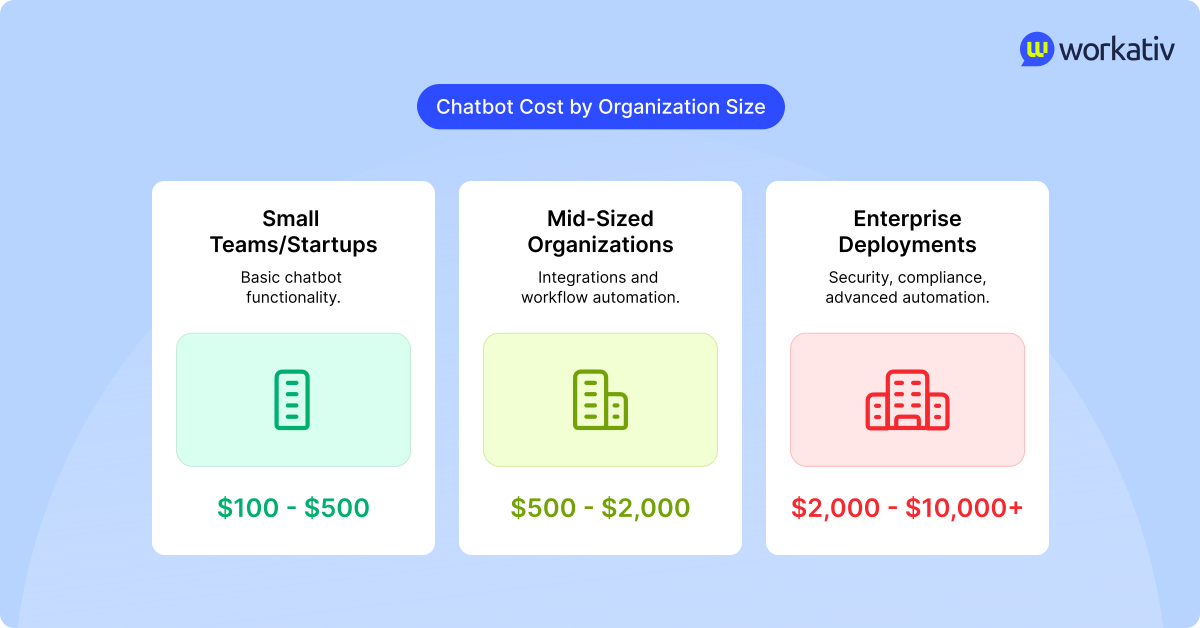
For hr chatbots for smbs, basic plans may start around $100–$500 per month, while mid-sized organizations often pay $500–$2,000 per month. Enterprise HR chatbot pricing plans with advanced automation, integrations, and compliance capabilities can range from $2,000 to $10,000+ per month.
This model works well for many organizations because it provides predictable HR chatbot subscription costs as usage grows.
Session-based pricing
Session-based pricing offers a more balanced approach by aligning pricing more closely with actual platform usage while maintaining better cost predictability for growing organizations.
Here’s how the common HR chatbot pricing models compare:
Model | Pricing risk |
Per-seat pricing | Costs rise as employee headcount grows |
Usage-based pricing | AI overage and token cost unpredictability |
Session-based pricing | More predictable scaling and budgeting |
For HR teams evaluating long-term HR automation investments, pricing predictability becomes just as important as the starting subscription cost.
This is one reason many growing companies prefer session-based HR chatbot pricing models over enterprise pricing structures that rely heavily on per-seat licensing or variable AI consumption charges.
The best pricing model is not always the cheapest upfront, it is the one that scales sustainably as employee adoption and automation usage increase over time.
Usage-based chatbot pricing
Some chatbot vendors follow a usage-based pricing model, where organizations are charged based on how much the chatbot is used rather than paying a fixed subscription fee.
Common usage metrics include:
number of chatbot conversations
AI tokens consumed
API calls to language models
message volume
To understand how this works in practice, many platforms price AI usage based on tokens or API requests to large language models. For example, LLM usage may cost anywhere between $0.50 to $5 per million tokens, depending on the model and provider. A single employee conversation can consume 1,000–5,000 tokens, depending on the query's complexity and the number of responses generated.
If an HR chatbot handles around 10,000 employee queries per month, AI usage costs alone could range from roughly $20 to $200 per month. As usage grows to 100,000 or more interactions, those costs can increase significantly.
Because of this, usage-based pricing can appear inexpensive at first. However, as employee adoption increases across the organization, the costs can scale quickly and become harder to predict.
The Total Cost of Ownership (TCO) for enterprise HR chatbots
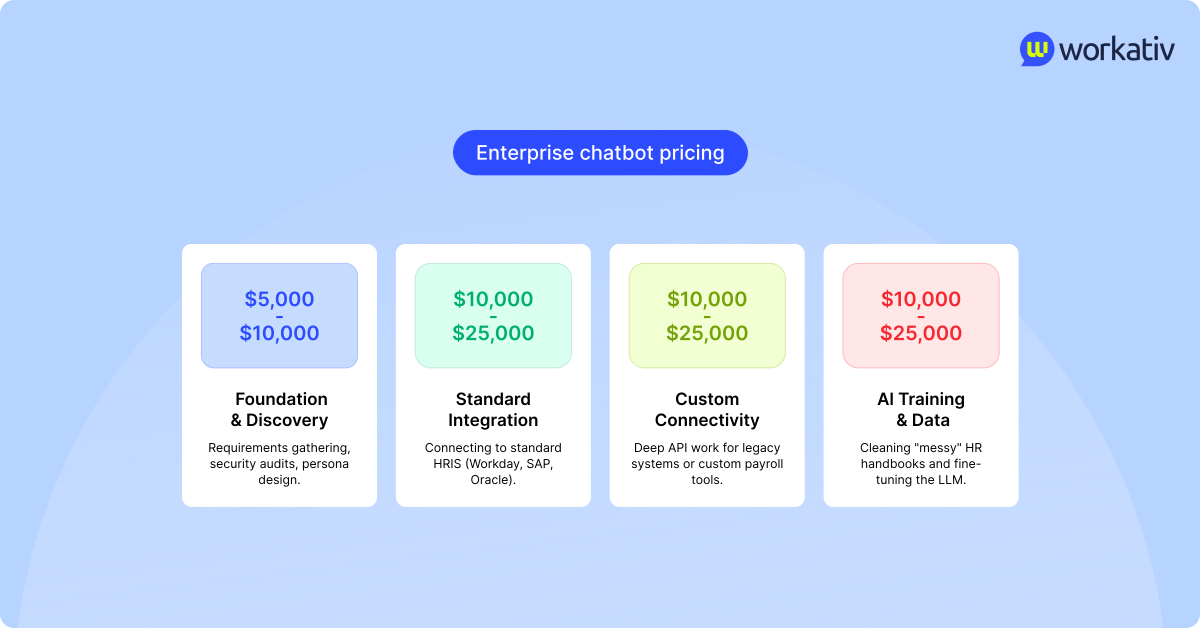
Enterprise HR chatbot deployments often involve much more than the base software subscription. Large organizations typically require:
advanced security and compliance
custom HRIS and payroll integrations
workflow automation across departments
dedicated infrastructure and enterprise support
Because of this, enterprise HR chatbot pricing can extend far beyond monthly platform fees. Organizations may also incur costs related to:
implementation consulting
custom development
ongoing maintenance
AI usage scaling
workflow customization
In many cases, enterprise HR chatbot deployments can exceed $10,000+ per month or result in annual ownership costs of $200K+ once implementation and operational expenses are included.
For growing companies evaluating affordable AI HR tools for small companies, these pricing models can become difficult to justify — especially when the primary goal is scalable employee support automation rather than highly customized enterprise infrastructure.
Many SMBs overpay because enterprise pricing models are designed for large organizations.
Enterprise deployments may also involve:
long implementation cycles
dependency on external consultants
complex pricing structures
ongoing customization costs
This is why many businesses now evaluate more cost-effective HR chatbot solutions for SMBs and budget HR automation software that offer:
predictable pricing
no-code deployment
built-in integrations
scalable automation without enterprise-level complexity
As organizations compare vendors, many HR teams now prioritize HR automation platform pricing comparisons and session-based HR chatbot pricing models that provide more predictable long-term budgeting as employee adoption grows.
Agency-built chatbot pricing
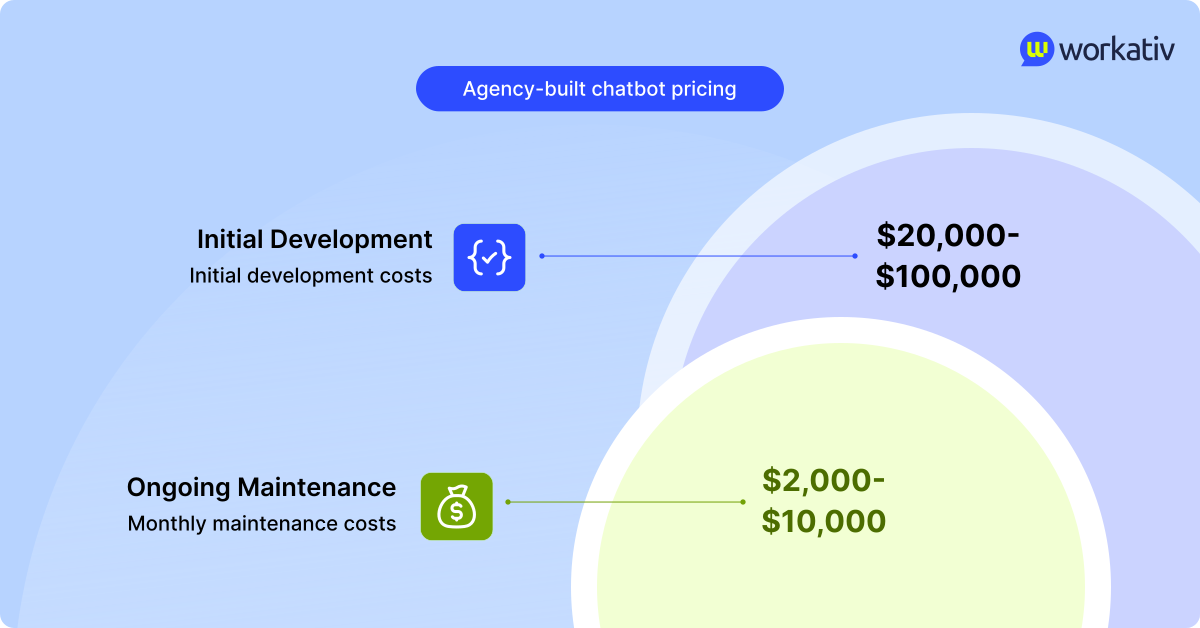
Some organizations choose to build HR chatbots through AI development agencies or system integrators instead of adopting a ready-made platform. This approach usually involves creating a customized chatbot tailored to the organization’s internal systems and workflows.
Agency-built chatbot projects typically include costs such as:
consulting and strategy planning fees
custom chatbot development
integrations with HR systems and internal tools
implementation and deployment services
ongoing maintenance and support contracts
Because these projects are built from scratch, costs can be significantly higher than those of platform-based chatbot solutions. Initial development alone can range from $20,000 to $100,000 or more, depending on the complexity of integrations and automation workflows.
In addition to the upfront investment, organizations often pay ongoing maintenance or improvement costs, which may range from $2,000 to $10,000 per month for updates, monitoring, and feature enhancements.
While agency-built chatbots can offer deep customization, many organizations now prefer AI chatbot platforms that allow HR teams to configure and deploy chatbots without heavy development costs or long implementation timelines.
USAGE FEES. ADD-ON CHARGES. AGENCY COSTS.
Most HR chatbot pricing grows faster than you expect. Workativ gives you predictable costs - no surprises.
No AI credit exhaustion · No hidden add-ons · No lock-in
See Workativ AI in action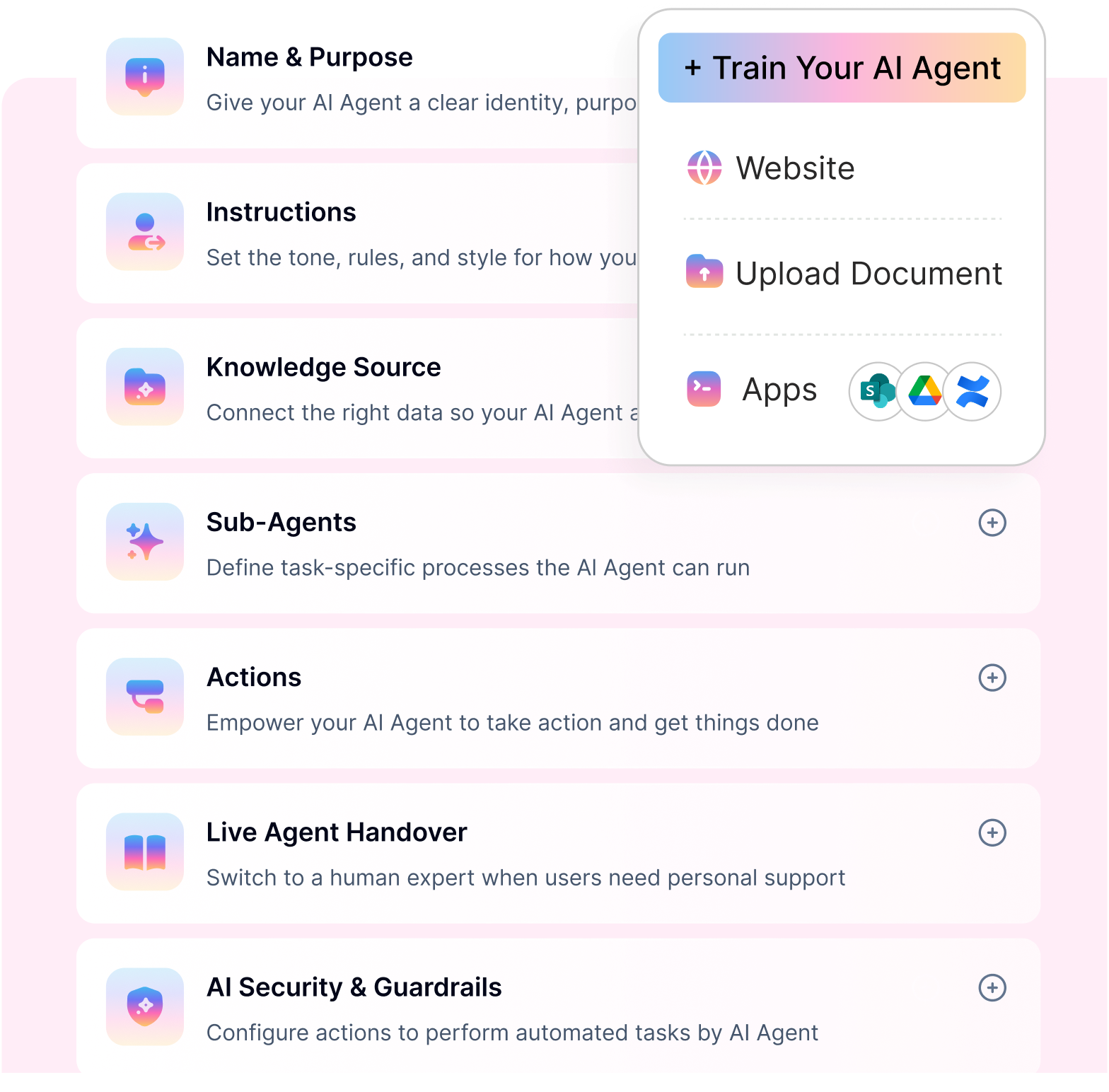
What pricing model scales best for growing companies?
One of the biggest differences between HR chatbot platforms is how pricing scales as organizations grow.
Some vendors charge:
per employee seat
per AI interaction
by token usage
through enterprise contracts with fixed annual commitments
As adoption increases, these pricing models can create budgeting challenges for growing teams.
This is why many organizations now evaluate session-based HR chatbot pricing models, which scale based on actual chatbot usage rather than total employee headcount.
For growing companies, this model can provide:
more predictable budgeting
easier ROI forecasting
lower risk of sudden pricing increases
better alignment between usage and cost
The best pricing model is not always the one with the lowest starting price. It is the one that remains sustainable and predictable as automation usage expands across the organization.
HR chatbot cost breakdown: what organizations should expect
Understanding HR chatbot pricing requires looking beyond the software subscription alone. While the platform fee is an important part of the cost, the total cost of ownership usually includes several technical, operational, and infrastructure-related components.
Organizations deploying HR chatbots often incur expenses related to AI usage, integrations, data storage, analytics, security, and compliance. These factors can significantly influence the overall investment required to build, deploy, and maintain a chatbot over time.
To make a better HR chatbot cost comparison, it’s important to understand the different cost drivers that typically contribute to the overall pricing. The following sections break down the key factors organizations should expect when budgeting for an HR chatbot deployment.
Chatbot subscription costs
The AI HR chatbot subscription cost usually depends on the capabilities offered by the platform. Most vendors structure their pricing in tiers, where higher plans provide more advanced automation, integrations, and enterprise features.
Typical pricing tiers include:
Basic plans
basic chatbot automation
limited integrations
basic analytics and reporting
Estimated cost: $100 – $500 per month
Professional plans
workflow automation
advanced analytics and reporting
integrations with HR systems and internal tools
Estimated cost: $500 – $2,000 per month
Enterprise plans
security and compliance features
dedicated infrastructure or private deployments
enterprise support and service-level agreements
Estimated cost: $2,000 – $10,000+ per month
When conducting an HR chatbot cost comparison, organizations should carefully evaluate which features are included within each pricing tier to understand the real value offered by the platform.
Agency costs for chatbot implementation
Organizations that rely on external agencies to build HR chatbots often incur additional costs beyond the platform itself. Agencies typically manage the design, development, and deployment of the chatbot.
Common agency services include:
chatbot strategy consulting
conversation design
system integrations
infrastructure setup
AI training and optimization
Because these projects are customized, agency fees can vary widely depending on the complexity of the deployment.
Estimated agency costs:
Strategy and consulting: $5,000 – $20,000
Chatbot development and integrations: $20,000 – $80,000+
Full implementation projects: $50,000 – $200,000+
This is why many businesses today prefer no-code AI chatbot platforms, which allow internal teams to build and deploy HR chatbots without heavy agency involvement, helping reduce implementation costs.
Technology stack and development costs
The technology stack used to build and run a chatbot can significantly influence the overall cost. Organizations that choose to build custom chatbots often need to invest in several technical components to make the system functional and scalable.
Custom chatbot development may require:
backend infrastructure
AI orchestration and model management
database and knowledge base management
integration layers for HR systems and internal tools
ongoing monitoring, updates, and maintenance
At first, open-source chatbot frameworks may appear inexpensive because the software itself is free. However, they usually require significant developer involvement for setup, customization, integrations, and long-term maintenance.
Estimated technology and development costs:
Infrastructure and hosting: $200 – $2,000+ per month
Developer setup and customization: $10,000 – $50,000+
Ongoing maintenance and improvements: $1,000 – $5,000 per month
Over time, these technical requirements can make custom chatbot deployments more expensive than initially expected.
AI credit consumption and LLM usage costs
Many HR chatbots rely on large language models (LLMs) provided by third-party AI providers. Because of this, part of the chatbot cost often comes from AI credit consumption.
Costs typically depend on:
token usage
AI inference calls
multi-model routing
conversation complexity
Most LLM providers charge based on tokens processed, with pricing ranging roughly from $0.50 to $10 per million tokens depending on the model.
Estimated usage example:
Average tokens per HR conversation: 1,000 – 5,000
Cost for 10,000 conversations: $5 – $200+
As employee interactions grow, AI usage can increase significantly. That’s why organizations evaluating HR chatbot pricing models should carefully review how vendors charge for AI usage and how those costs scale over time.
Data storage and export costs
HR chatbots generate large volumes of conversation data over time. This data is usually stored for analytics, reporting, and compliance purposes.
Common storage costs may include:
conversation logs
analytics datasets
backup systems
long-term data retention
While exporting data may not always have a direct fee, storing large datasets on cloud platforms such as AWS or Azure can increase infrastructure costs as chatbot usage grows.
Costs Add Up Fast. Ours Don’t.
Enterprise contracts. Agency fees. AI credit bills. Workativ keeps costs predictable - no hidden layers.
Custom feature add-ons
Some chatbot platforms charge additional fees for advanced capabilities that are not included in the base plan.
These add-ons may include:
advanced analytics dashboards
white-label branding
custom reporting tools
workflow automation modules
API integrations
Over time, these add-ons can significantly increase the total HR chatbot subscription cost beyond the initial platform price.
Performance monitoring and analytics costs
Basic chatbot reporting usually includes metrics such as:
number of conversations
resolution rates
escalation rates
However, many organizations require deeper insights to measure the value of automation. This may include:
HR ticket deflection tracking
employee sentiment analysis
service desk performance metrics
automation ROI measurement
Platforms that provide advanced analytics and reporting capabilities may charge additional fees for these features.
Data protection vulnerabilities and security risks
HR chatbots handle sensitive employee data, which makes security a critical requirement.
Potential risks include:
employee misuse of internal data
accidental exposure of confidential information
regulatory or compliance violations
To mitigate these risks, organizations often invest in:
encryption systems
role-based access controls
audit logs and monitoring
security and compliance tools
These security measures can add to the overall cost of enterprise HR chatbot deployments.
Industry-specific compliance requirements
Different industries have unique compliance requirements that can influence chatbot costs.
For example:
Healthcare organizations must comply with HIPAA regulations. Financial institutions must follow financial data security standards. Global companies must comply with privacy regulations such as GDPR.
Meeting these standards may involve:
security audits
regulatory reporting
compliance infrastructure
These requirements can increase the cost of enterprise HR chatbot pricing plans.
Vendor lock-in and migration costs
Organizations should also consider the long-term flexibility of their chatbot platform.
Vendor lock-in can lead to challenges such as:
expensive migrations to new platforms
re-training AI models
rebuilding integrations
transferring knowledge bases
On-premise deployments may require significant infrastructure investment, while switching cloud platforms can also create operational and migration costs.
HR chatbot ROI calculator: estimate monthly savings
While understanding HR chatbot pricing is important, organizations should also evaluate the operational savings these systems can deliver over time.
For many HR teams, the ROI of HR automation comes from reducing repetitive support workload, improving response times, and scaling employee support without increasing headcount.
A simple way to estimate HR chatbot ROI is to compare:
repetitive HR support hours
average HR operational cost
estimated automation savings
Simple ROI formula
Estimated monthly savings = HR hours saved × average hourly HR cost
Example:
Metric | Example |
|---|---|
Repetitive HR support hours per month | 60 hours |
Average HR hourly cost | $30/hour |
Monthly manual support cost | $1,800 |
Estimated automation reduction | 50% |
Estimated monthly savings | $900 |
In many cases, automating repetitive HR requests can significantly reduce ticket volume while improving employee response times and operational efficiency.
For organizations evaluating budget HR automation software, comparing automation savings directly against manual support costs makes ROI easier to quantify.
How to justify the HR chatbot budget to leadership
For many HR leaders, budget approval depends on demonstrating measurable business impact rather than just AI capabilities.
Executives typically evaluate HR automation investments based on:
operational efficiency
support cost reduction
scalability
predictable budgeting
reduced manual workload
This is why financial framing matters when evaluating HR chatbot ROI.
Rather than positioning HR chatbots as standalone support tools, many organizations now evaluate them as operational efficiency platforms that help HR teams support more employees without proportionally increasing support costs.
As organizations compare vendors, many HR teams prioritize platforms that combine:
predictable pricing
scalable automation
lower implementation costs
measurable operational ROI
Affordable AI HR tools for small companies: what to look for
For small businesses and growing teams, choosing an HR chatbot is not just about finding the lowest starting price. It is about finding a platform that remains affordable as employee adoption, workflows, and automation needs increase over time.
The cheapest chatbot is not always the most affordable long-term.
Many organizations evaluating affordable AI HR tools for small companies initially focus on monthly subscription pricing but later encounter additional costs related to:
AI usage overages
workflow add-ons
implementation consulting
analytics upgrades
custom integrations
This is why SMBs should evaluate affordability based on total long-term operational cost rather than just entry-level pricing.
When comparing cheap HR automation tools for small businesses, some of the most important factors to evaluate include:
Transparent pricing : Look for platforms with predictable pricing structures and fewer hidden add-ons as usage scales.
No-code deployment : No-code platforms help reduce implementation costs and avoid dependency on developers or external agencies.
Built-in integrations : Pre-built integrations with HRIS, payroll systems, Slack, and Microsoft Teams can significantly reduce setup complexity and long-term maintenance costs.
Workflow automation : The platform should automate repetitive HR tasks such as leave requests, onboarding, payroll support, and employee helpdesk workflows.
Scalability : As companies grow, pricing should remain sustainable without dramatic increases tied to employee headcount.
Predictable budgeting : Many growing teams now prefer pricing models that provide better cost predictability as automation usage increases.
For organizations searching for a low cost HR chatbot for small teams or an HR AI tool under $500/month, long-term affordability often depends more on pricing predictability and implementation simplicity than on the lowest advertised starting price.
This is why many SMBs now prioritize more cost-effective HR chatbot solutions for SMBs that balance automation capabilities, scalability, and predictable operational costs.
How to choose the right HR chatbot pricing model
When conducting an HR chatbot cost comparison, organizations should evaluate several factors that influence both upfront investment and long-term operational costs.
Pricing model (subscription vs usage-based) : Some platforms charge a fixed monthly subscription, while others charge based on usage such as messages or AI tokens. Subscription pricing is often easier to predict, while usage-based models may become more expensive as employee interactions increase.
AI credit costs : Many chatbot platforms rely on third-party language models. If pricing is tied to AI token usage, costs can grow as more employees interact with the chatbot. Understanding how AI credits are consumed helps avoid unexpected expenses.
Integration capabilities : HR chatbots usually need to connect with systems such as HRIS platforms, payroll software, or employee portals. Platforms that offer built-in integrations can reduce development costs compared to those requiring custom API work.
Compliance support : Organizations operating in regulated industries need chatbot platforms that support compliance standards such as GDPR, HIPAA, or financial data protection frameworks. Compliance capabilities can influence both platform pricing and infrastructure requirements.
Analytics features : Analytics help HR teams track metrics like ticket deflection, chatbot usage, and employee satisfaction. Some platforms include basic analytics in their plans, while advanced insights may require additional costs.
Scalability : As organizations grow, chatbot usage also increases. Choosing a platform that scales efficiently helps prevent sudden cost increases when employee interactions rise.
Implementation complexity : Some chatbot solutions require extensive development work or agency involvement. Platforms with no-code or low-code deployment options can significantly reduce implementation costs and time.
The best chatbot platform is not always the cheapest upfront option. The right choice is one that provides predictable pricing, strong automation capabilities, and the flexibility to grow with the organization.
No-code deployment reduces agency costs
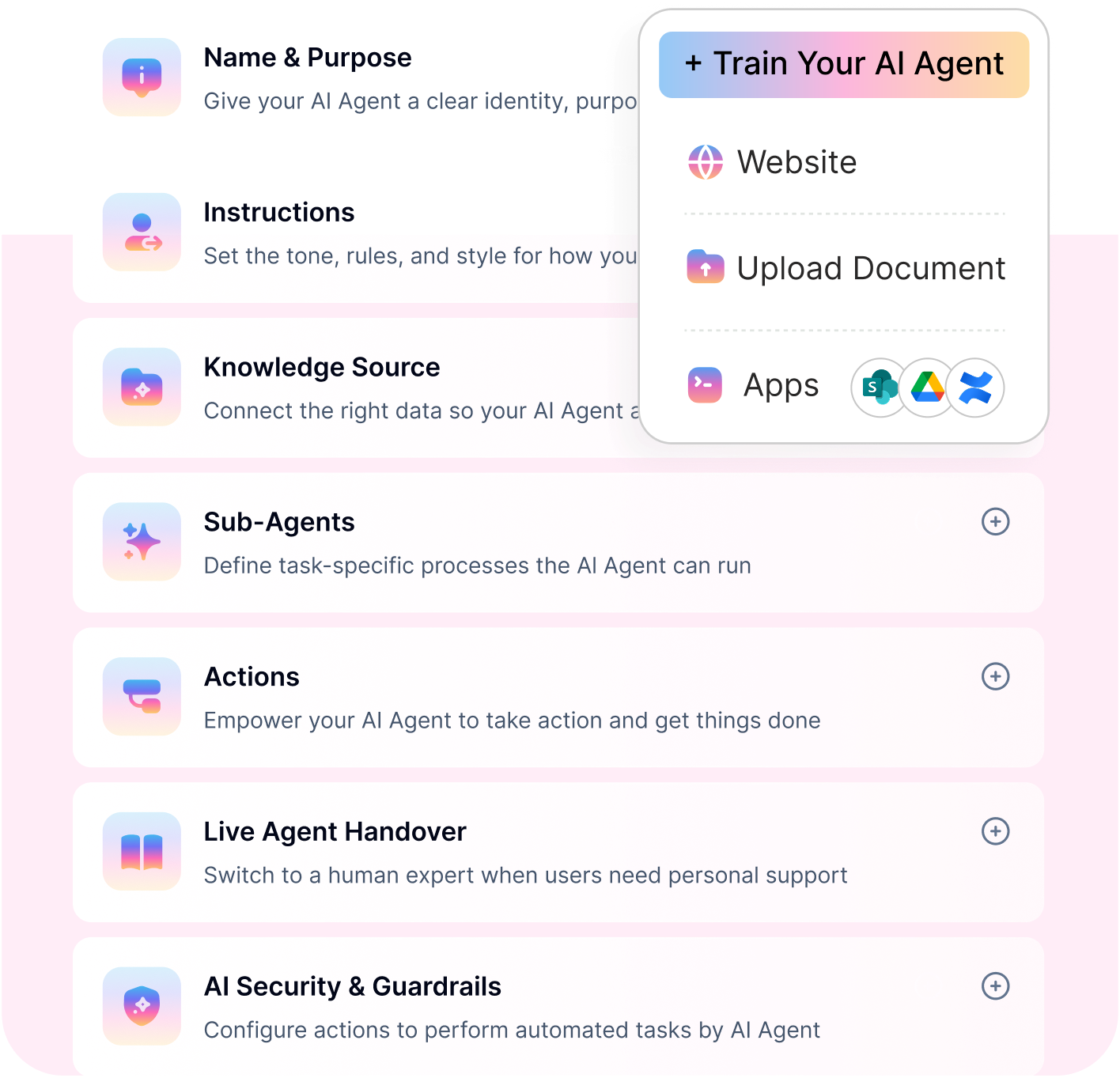
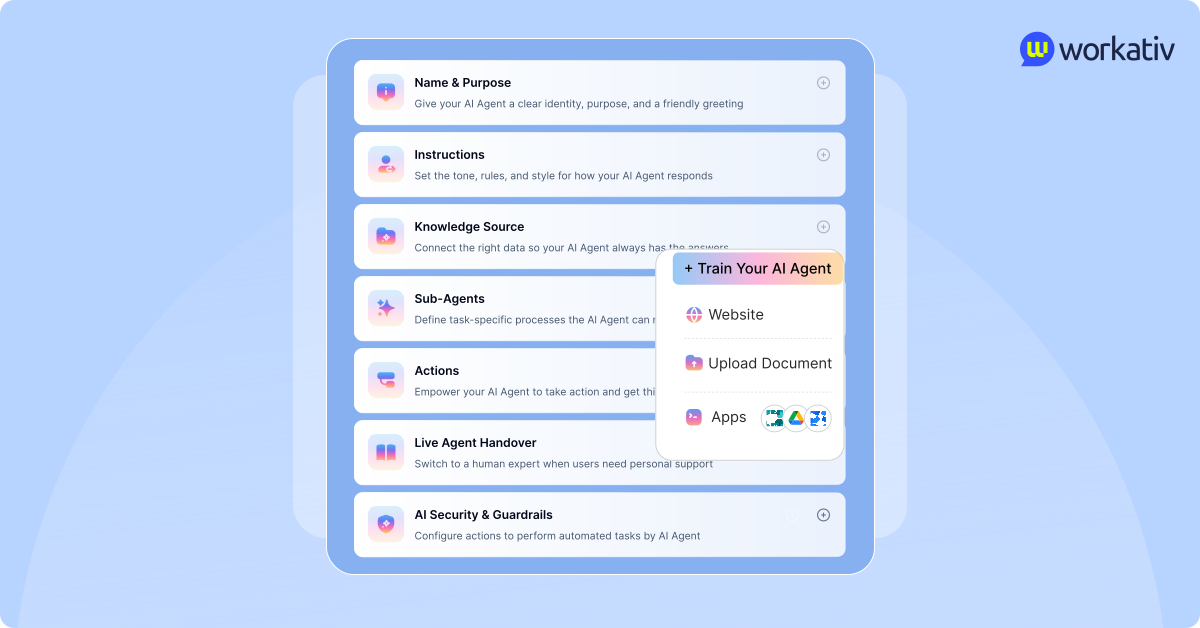
Workativ allows HR teams to build and deploy AI chatbots without requiring developers or external implementation agencies. With a no-code interface, HR teams can configure workflows, train the chatbot, and connect knowledge sources directly within the platform.
This eliminates the need for expensive agency consulting, long development timelines, and complex infrastructure setup. As a result, organizations can launch HR chatbots much faster while significantly reducing implementation costs.
Flexible pricing without AI credit exhaustion
Many chatbot vendors rely heavily on AI credit consumption, in which costs increase with the number of tokens or messages processed. This can create uncertainty as usage grows, especially when more employees begin interacting with the chatbot.
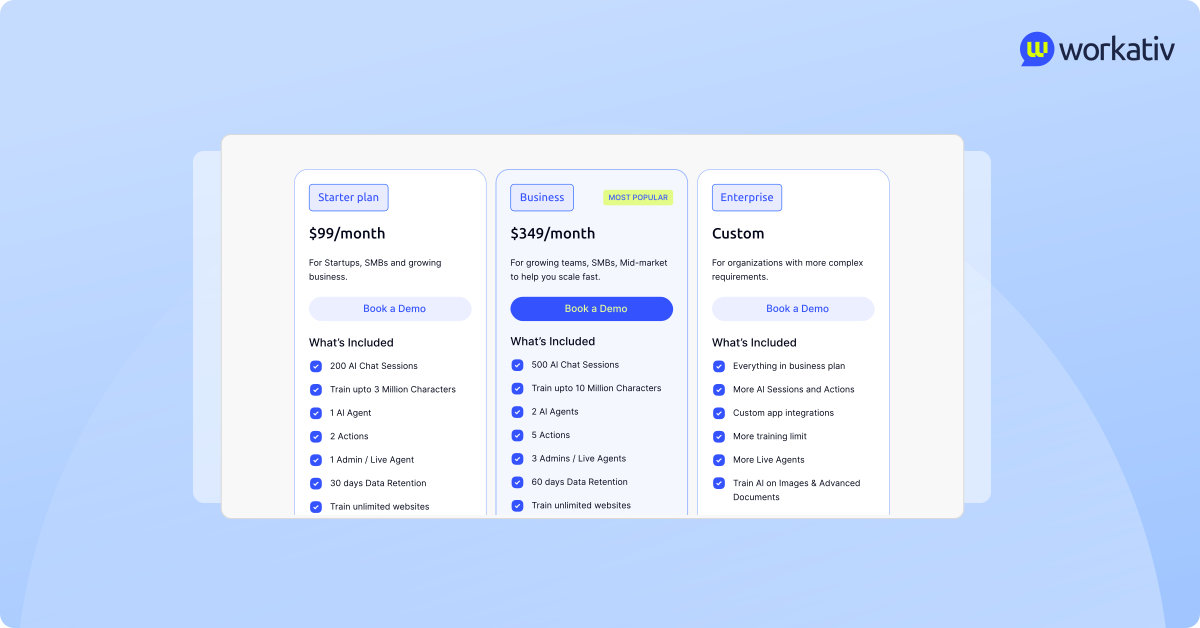
Workativ’s flexible pricing model helps reduce the risk of credit exhaustion during conversations. This ensures employee support interactions continue without interruptions while giving organizations better cost predictability as chatbot adoption increases.
No hidden add-ons
Some chatbot platforms charge additional fees for features such as advanced analytics, automation workflows, system integrations, custom white-label branding, file storage, or additional AI credits. As organizations expand their chatbot capabilities, these add-ons can gradually increase the total cost of the platform.
Workativ includes many enterprise capabilities within its core platform, reducing the need for multiple paid upgrades. This helps organizations maintain more predictable pricing while still accessing the features needed to automate HR support.
Built-in integrations reduce implementation costs
Workativ supports integrations with workplace platforms such as Slack, Microsoft Teams, HRIS systems, and enterprise knowledge bases. These pre-built integrations allow organizations to connect their HR chatbot with existing tools quickly.
By providing ready-to-use integrations, Workativ reduces the need for custom API development or complex setup, helping organizations lower implementation costs and deploy HR automation faster.
ALL OF THAT - SIMPLIFIED INTO ONE PRICE.
Workativ includes automation, integrations, analytics and security - no separate add-ons required.
No-code · Deep integrations · Deploy in minutes
See a Quick DemoUnderstanding HR chatbot pricing helps businesses choose smarter
AI chatbots are transforming how organizations deliver employee support and manage HR service operations. But choosing the right solution requires more than comparing prices. Organizations need to understand the full pricing structure — including HR chatbot pricing models, enterprise chatbot pricing plans, subscription costs, and potential hidden expenses.
When evaluating chatbot platforms, it’s important to consider factors such as total cost of ownership, scalability, automation capabilities, compliance readiness, and the long-term ROI the platform can deliver.
This is where Workativ provides a strong advantage. By combining a no-code chatbot builder, built-in integrations, flexible pricing, and enterprise-grade capabilities, Workativ allows organizations to deploy HR chatbots without heavy development costs or unpredictable AI usage charges. HR teams can automate employee support faster while keeping costs controlled and scalable as the organization grows.
If you're exploring HR chatbot solutions and want a cost-effective way to automate employee support, try Workativ and see how quickly you can deploy an AI-powered HR assistant for your workplace.
FAQs
How much does an HR chatbot cost?
The cost of an HR chatbot can vary widely depending on the platform, features, and deployment method. Basic chatbot subscriptions may start around $100–$500 per month, while mid-sized deployments can range from $500–$2,000 per month. Enterprise HR chatbot pricing plans with advanced automation, integrations, and compliance capabilities can cost $2,000–$10,000+ per month.
What factors influence HR chatbot pricing?
Several factors influence HR chatbot pricing, including the pricing model (subscription or usage-based), AI token consumption, system integrations, analytics capabilities, security requirements, and compliance needs. Implementation costs and customization requirements can also impact the overall investment.
What are the common HR chatbot pricing models?
Most vendors follow one of four pricing models: subscription-based pricing, usage-based pricing tied to AI interactions, enterprise licensing with custom pricing, and agency-built chatbot solutions that involve consulting and development fees.
Are HR chatbots worth the investment?
Yes. HR chatbots can reduce HR helpdesk workloads, provide instant responses to employee questions, and automate repetitive HR tasks. This improves employee experience while allowing HR teams to focus on strategic initiatives, often delivering strong long-term ROI.
How can organizations reduce HR chatbot implementation costs?
Organizations can reduce chatbot costs by choosing platforms that offer no-code deployment, built-in integrations, predictable pricing models, and enterprise-ready features. Solutions like Workativ allow HR teams to build and deploy chatbots without heavy development costs or reliance on external agencies.
Which pricing model is best for growing HR teams?
Subscription-based pricing is usually best for growing HR teams because it offers predictable monthly costs, easier budgeting, and fewer surprises as employee adoption increases across departments.
How do hidden chatbot costs impact long-term ROI?
Hidden costs like AI overage credits, custom integrations, analytics upgrades, and agency maintenance fees can significantly increase total ownership cost, reducing the expected ROI over time.
What should enterprises compare beyond the monthly chatbot fee?
Enterprises should compare implementation effort, compliance support, scalability, AI usage rules, built-in integrations, support SLAs, and analytics depth to understand real long-term value.
What should businesses compare beyond the monthly chatbot fee?
Organizations should evaluate:
implementation costs
AI usage pricing
scalability
workflow automation capabilities
integration support
analytics features
long-term operational overhead
The lowest starting price does not always result in the lowest total cost of ownership.
Which HR chatbot pricing model is best for growing teams?
For many SMBs and growing organizations, pricing models with predictable scaling tend to work best long-term. Many companies now compare subscription, usage-based, and session-based HR chatbot pricing models to find the best balance between affordability, scalability, and budgeting predictability.
How can HR leaders justify chatbot budget to leadership?
The easiest way to justify HR chatbot investment is by demonstrating operational savings and scalability benefits. Many organizations calculate HR chatbot ROI by comparing repetitive HR support workload against automation savings, reduced ticket volume, and improved employee response times.
What is session-based HR chatbot pricing?
A session-based HR chatbot pricing model charges organizations based on chatbot usage sessions rather than employee headcount. This helps growing companies scale HR automation more predictably without large pricing increases tied directly to workforce growth.
'%3e%3cpath%20d='M11.5732%2031.7068L19.2977%2022.7433L11.5732%2011.5366H17.4664L22.6245%2018.942L29.0522%2011.5366H30.7788L23.4029%2020.0985L31.4127%2031.7086H25.4997L20.1231%2023.9069L13.3197%2031.7068H11.5732ZM16.6519%2012.8366H13.9536L26.354%2030.4462H28.9926L28.8265%2030.1576L16.6519%2012.8366Z'%20fill='%230C0C0C'/%3e%3c/g%3e%3cdefs%3e%3cclipPath%20id='clip0_505_14364'%3e%3crect%20width='19.7681'%20height='20.2432'%20fill='white'%20transform='translate(11.573%2011.5365)'/%3e%3c/clipPath%3e%3c/defs%3e%3c/svg%3e)

'%3e%3cpath%20d='M25.2175%2011.7557L26.9132%2011.911V15.0496C26.0135%2015.1444%2024.1746%2014.7452%2023.5821%2015.5947C23.4908%2015.726%2023.3291%2016.1592%2023.3291%2016.3091V19.002H26.7392L26.3346%2022.5281H23.3291V31.5952H19.707V22.5863L19.649%2022.5281H16.6628V19.002H19.707C19.7813%2017.4024%2019.4664%2015.7042%2020.1132%2014.1986C20.6748%2012.8902%2021.7857%2012.0974%2023.1666%2011.8435L23.7151%2011.7557H25.2183H25.2175Z'%20fill='%230C0C0C'/%3e%3c/g%3e%3cdefs%3e%3cclipPath%20id='clip0_505_14375'%3e%3crect%20width='10.2695'%20height='19.8027'%20fill='white'%20transform='translate(16.658%2011.7567)'/%3e%3c/clipPath%3e%3c/defs%3e%3c/svg%3e)
About the Author
Deepa Majumder

Senior content writer
Deepa Majumder is a writer who nails the art of crafting bespoke thought leadership articles to help business leaders tap into rich insights in their journey of organization-wide digital transformation. Over the years, she has dedicatedly engaged herself in the process of continuous learning and development across business continuity management and organizational resilience.
Her pieces intricately highlight the best ways to transform employee and customer experience. When not writing, she spends time on leisure activities.
Auto-resolve 60% of Your Employee
Queries With AI Agents & Automation
- No credit card required
- Setup in minutes
- Cancel Anytime